- Joined
- Not public
- How they joined
- Directly
- Status
- Current
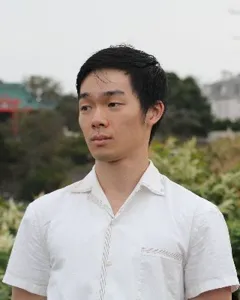
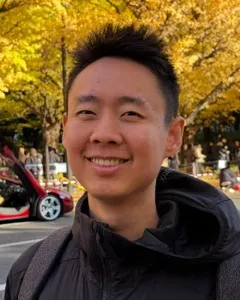
- The competitive programmer desert97 (the handle tied to this profile) is listed on Codeforces as 'Yang Liu, St Louis, United States, From Stanford ACM', an International Grandmaster. Louis / MIT / Stanford trajectory of theorist Yang P. Liu; the tie to the Cognition researcher itself still rests on name and teammate overlap.Nov 2026
- Yang P. Liu's academic homepage says he graduated from MIT in May 2018, earned a PhD at Stanford advised by Aaron Sidford, was a Postdoctoral Member at the Institute for Advanced Study, and is an Assistant Professor in CMU's Computer Science Department; this timeline (MIT ICPC 2018, Stanford ICPC 2019) matches desert97's contest history.Nov 2026
- Was on the US team that took first place at the 2015 International Mathematical Olympiad, alongside teammates including Shyam Narayanan and David Stoner (MAA FOCUS).Oct 2015
- CMU faculty page credits Yang P. Liu with the A.W. Tucker Prize, a Google Ph.D. Research Fellowship, and Best (Student) Paper awards at FOCS, STOC and ITCS; his research covers graph algorithms, optimization, high-dimensional geometry and additive combinatorics.2026
- Competed for Stanford University (Stanford Cardinal) at the ICPC 2019 World Finals with Eric Xu and Wenli Looi.Apr 4, 2019
- Gave the Princeton CS Colloquium 'Graphs, Optimization, Geometry, and Fast Algorithms' on 2023-04-10 (host Gillat Kol), covering maximum flow in almost-linear time, discrepancy minimization and linear regression.Apr 10, 2023
- Placed 8th at CodeChef SnackDown 2019 as team 'moofest' with xiaowuc1.Feb 16, 2019
- Placed 15th at AtCoder Code Festival 2017 (prize JPY 12,283) and 10th in the Lyft Level 5 Challenge 2018, competing under the handle desert97 (AtCoder, Codeforces, CodeChef, Topcoder).Nov 25, 2017
- Yang P. Liu was supported by an NDSEG Fellowship (2018-2021) and a Google PhD Fellowship (2022-2023), and co-advises CMU student Hoai-An Nguyen with David Woodruff.Nov 2026
Just back from the IMO in Shanghai, where I had the honor of serving as Deputy Leader for Team USA. The student did great! I’ve always thought Deputy Leader is the best role: you get to experience every side of the IMO, from supporting the students to meeting leaders and coordinators from around the world. Next stop: SF for the rest of the summer. Excited to meet up with anyone who's around!

1/ Technical thread on #1stProof Problem 6: finding “spectrally light” vertex subsets in a graph, and how its solution fits into the landscape of spectral sparsification + restricted invertibility. Original thread: https://t.co/c9Z9RH2Ont
My thoughts on #1stProof Problem 6 (closely related to areas I've worked in): OpenAI’s solution is essentially correct, and the difficulty feels consistent with AI capabilities over the past several months. More detail in the thread.
I saw two posts presenting the new preprint “Maximum Flow Without the Outer IPM” as “IPM-free,” notably short, and a substantial simplification: In the spirit of open scientific discussion, I wanted to share my personal view on whether it meaningfully “avoids IPMs” or is technically “simpler.” https://t.co/7vxzNtqU9f https://t.co/j0CYuKZ71u
guess I’m ahead of the curve as usual
In a sequence of new preprints with Amey Bhangale, Subhash Khot, and Dor Minzer, we obtain improved bounds for the density Hales-Jewett (DHJ) problem for combinatorial lines of length 3.
Strange matrix fact I encountered -- if A, B >= I are psd matrices, for what c > 0 is it true that the minimum singular value of I+cAB is at least 1+c? Guesses welcome! (will follow up in a bit)
Just posted a new paper with Ryan Alweiss and Mehtaab Sawhney. We study discrepancy minimization in an online setting against an oblivious adversary -- given vectors v1 ... v_t on unit ball in R^n, assign +-1 signs online to keep the l_inf-norm of the sum as small as possible.