
RESEARCHED WITH AUTUMN
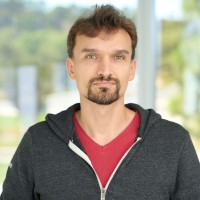 IG
IGIgor Ganichev
Software Engineer/Quantitative Trading Researcher
a private hedge fund ·  Berkeley, California, United States · engineer
Berkeley, California, United States · engineerGold Medal (2001) And Two Silver Medals (2000, 2002) At The International Mathematical Olympiad Representing KazakhstanBS Mathematics And BS Computer Science, MIT (2002-2006); PhD Computer Science, UC Berkeley (2011)Engineering Roles At Google Brain/TensorFlow, VMware (NSX Networking) And NiciraIndex-listed Quantitative Researcher At An Unnamed Private Hedge Fund From 2020 (unverified, Index-only)
Details

LocationBerkeley, California, United States
Company siteprivate-hedge.com
UniversityUniversity of California, Berkeley
PythonMatlabAlgorithm DesignVirtualizationC++High Performance ComputingLinuxUnixAlgorithmsCMySQLSimulationsJavaVMwareNetwork SecurityGrant WritingProgrammingTCP/IPNetwork virtualizationMultipath routingMachine learning infrastructureCompetitive mathematics
Notes


- Quant employment verification: UNRESOLVED. A LinkedIn-derived index record lists a current role as 'Quantitative Researcher' at 'a private hedge fund' (start ~2020-05, ongoing) and a headline 'Software Engineer/Quantitative Trading Researcher'. This is index/aggregator-only and is NOT independent primary-source confirmation; the employer is anonymized ('a private hedge fund'), so it cannot be classified as a quantitative trading firm, and no primary page (company, personal, press) corroborates the role. Identity is strongly supported (IMO, MIT, Berkeley thesis, CyberMath all describe one person), but the finance role rests solely on the index. Separately, the only other finance-adjacent employer, D. E. Shaw Research (2006), is a computational-chemistry research organization and his role there was engineering (cluster troubleshooting tools, driver porting), not quant trading. Verdict retained as UNRESOLVED because the role is index-only and the employer unverifiable, not because of a conflicting primary source.May 2020
- Career timeline from the index: MIT BS Mathematics and BS Computer Science 2002-2006; UC Berkeley PhD candidate 2006-2011; Nicira senior software engineer 2011-2012; VMware staff/senior staff engineer 2012-2017 (NSX network virtualization, messaging architecture); Google senior software engineer 2017-2020 on Google Brain/TensorFlow; Quantitative Researcher at an unnamed private hedge fund from 2020. Engineering-heavy trajectory with a late finance role.2020
- D. E. Shaw Research, May-Sep 2006: built troubleshooting tools for a 2000-node InfiniBand cluster and ported Linux drivers to custom boards. D. E. Shaw Research is a computational-chemistry research organization (the for-profit D. E. Shaw group hedge fund is a separate entity); the role was systems engineering, not a quantitative trading desk.May 2006
- IMO record for Kazakhstan: 2000 Silver (22 pts, rank 89), 2001 Gold (31 pts, rank 33), 2002 Silver (28 pts, rank 40) - a gold-and-two-silver Olympiad record matched by his own LinkedIn 'Honors & Awards' and an independent faculty bio.Jul 2002
- Identity synthesis: the IMO contestant (Kazakhstan, 2000-2002), the MIT Putnam honoree (2002), the Berkeley PhD in networking (2011), and the CyberMath/Google Brain instructor bio all describe the same individual, so the name-to-record link is well supported even though the quantitative-finance role itself is not.Jun 2022
- Career-shape inference: a gold-and-two-silver IMO record plus MIT math is exactly the profile that flows into quantitative finance, yet his documented path runs networking/virtualization research then large-scale ML infrastructure for ~14 years before the index first shows a quant title - the finance move is late and, per the index header, still framed as 'Software Engineer/Quantitative Trading Researcher'.2020
- Doctoral dissertation 'Interdomain Multipath Routing', UC Berkeley Computer Science, Fall 2011; full name on the thesis is Igor Anatolyevich Ganichev, committee Scott Shenker (chair), Ion Stoica, Ahmet Yildiz.Nov 2011
- Honorable Mention, 2002 William Lowell Putnam Mathematical Competition, listed as an MIT student ('IGOR A. GANICHEV, Massachusetts Institute of Technology') - independent primary confirmation that the IMO contestant attended MIT.Dec 7, 2002
- Listed as a math instructor at CyberMath Academy (Boston), whose bio independently states he 'holds a PhD from University of California, Berkeley and two Bachelor Degrees from MIT, one in Mathematics and one in Computer Science,' was on the Google Brain team working on TensorFlow, and won IMO gold (2001) and two silvers (2000, 2002) - a self-consistent cross-source confirmation of the same person across academic, employer, and Olympiad facts.Jun 2022
- Patents and publications place him on the Google Brain TensorFlow team through ~2019: co-author of 'TensorFlow Eager: A Multi-Stage, Python-Embedded DSL for Machine Learning' (arXiv 1903.01855, 2019) and of the auto-vectorization framework in ICML 2019 'Static Automatic Batching in TensorFlow' (acknowledged 'Igor Ganichev for insightful feedback').Mar 2019
- Early internships: VMware software engineering intern 2008 (TCP segmentation offloading from hosted VMs) and Google software engineering intern 2010 (OpenFlow controller troubleshooting tools) - both engineering, neither quantitative finance.2010
- Networking-era research: co-author of 'Pathlet Routing' (ACM SIGCOMM 2009) and 'YAMR: yet another multipath routing protocol' (2009), and of the NSX/NVP datacenter-network virtualization line (Koponen et al.), matching his Nicira/VMware roles.Aug 2009
Experience
Quantitative Researcher at a private hedge fund
Senior Software Engineer at Google
Mountain View, CA
Google Brain/Tensorflow
Senior Staff Engineer at VMware
Palo Alto, CA
Responsible for the messaging architecture and other core platforms pieces of NSX
Staff Engineer at VMware
Palo Alto, CA
Working on VMware's network virtualization product, NSX
Senior Software Engineer at Nicira
Palo Alto, Ca
Optimizing, extending, tooling for a custom programming language compiler and its runtime. Developing a troubleshooting feature TraceFlow. Scaling REST APIs to multiple controller
Software Engineering Intern at Google
Mountain View, CA
Wrote OpenFlow controller troubleshooting tools
Software Enginnering Intern at VMware
Palo Alto, CA
Implemented TCP Segmentation Offloading from hosted Virtual Machines
PhD Candidate at UC Berkeley
Berkeley, CA
Researched Multipath Routing and Software Defined Networking
Education
University of California, Berkeley
Doctor of Philosophy (Ph.D.), Computer Science
Massachusetts Institute of Technology
Bachelor of Science (BS), Mathematics
Projects
Pathlet Routing
YAMR
NSX / NVP network virtualization
TensorFlow Eager & auto-vectorization
AchievementsGold medal and two Silver medals at the International Mathematical Olympiad (IMO) · Honorable Mention at the Putnam Mathematical Competition
Articles
AwardsGold medal, International Mathematical Olympiad 2001 (Kazakhstan) · Silver medal, International Mathematical Olympiad 2000 and 2002 (Kazakhstan) · Honorable Mention, 2002 William Lowell Putnam Mathematical Competition (MIT)
Profiles
Competition record
Kazakhstan · IMO