Physiology or Medicine · Oct 5, 2026
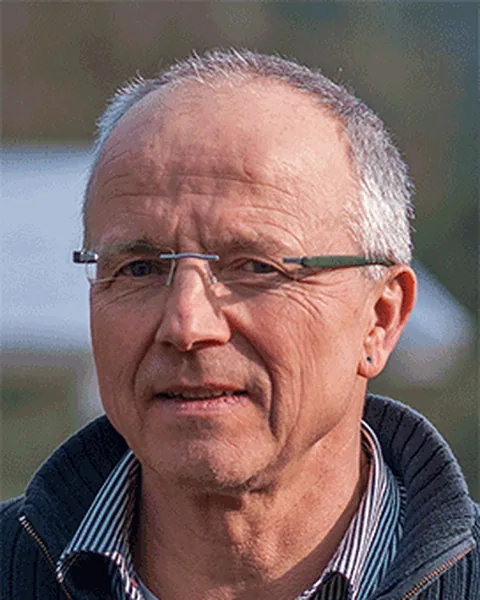
Karl Deisseroth
“for their discoveries concerning light-gated ion channels and optogenetics”
- Born
- Boston, Massachusetts, USA, 1971
- Age at award
- 54
- Affiliation at award
- Stanford University; Howard Hughes Medical Institute
Key work
“Millisecond-timescale, genetically targeted optical control of neural activity,” Nature Neuroscience, 2005
Sources1nobelprize.org
Career
- 1992BA in biochemical sciences, Harvard
- 1998PhD in neuroscience, Stanford, on how synapses talk to the cell nucleus. MD follows in 2000
- AfterPsychiatry residency at Stanford. Still a practicing psychiatrist
- 2003Hired into Stanford Bioengineering by its founding chair, Scott Delp
- 2004Opens his lab and starts the optogenetics project with two graduate students
- 2005Publishes the technique in Nature Neuroscience. Within two years it works in living mice
- 2009Uses optogenetics to show how deep brain stimulation helps in a Parkinson's disease model
- 2014–19Foreign adjunct professor at the Karolinska Institute, Sweden
Lesser-known facts
- Both parents trained as scientists: his father in oncology, his mother in chemistry.
- Told The New York Times in 2014 that his first love was writing.
- Planned on neurosurgery until meeting patients on his psychiatry rotation at Stanford.
- Lost the ability to form words for about 30 seconds when he heard the news.
- The 36th HHMI scientist to receive a Nobel Prize.
Mentors and collaborators
- Doctoral advisor
- Richard Tsien
- Also trained with
- Robert Malenka
- Students
- Feng Zhang, Viviana Gradinaru, Edward Boyden, Kay Tye, Ilana Witten, Priya Rajasethupathy
- Spouse
- Michelle Monje, pediatric neuro-oncologist at Stanford Medicine