Physiology or Medicine · Oct 5, 2026
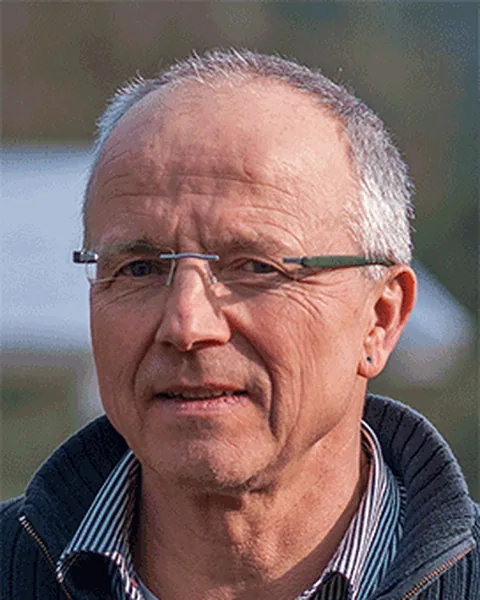
Georg Nagel
“for their discoveries concerning light-gated ion channels and optogenetics”
- Born
- Weingarten, Germany, 1953
- Age at award
- 73
- Affiliation at award
- University of Würzburg
Key work
“Channelrhodopsin-2, a directly light-gated cation-selective membrane channel,” PNAS, 2003 (first author)
Sources1nobelprize.org
Career
- KonstanzStudies biology and biophysics, working with Ernst Bamberg on ion channels
- DetourBriefly teaches at a Swiss grammar school
- 1988PhD, Goethe University Frankfurt, with Bamberg at the Max Planck Institute of Biophysics
- PostdocFive years in the US, at Yale and then Rockefeller University
- Early 1990sReturns to the Max Planck Institute of Biophysics in Frankfurt to lead a group
- 1995With Bamberg, shows bacteriorhodopsin still works inside frog egg cells
- 1999Marie Curie Fellow at the University of Naples
- 2003Shows channelrhodopsin-2 is a directly light-gated channel (PNAS)
- 2004Professor of Molecular Plant Physiology, University of Würzburg
Lesser-known facts
- Bone inflammation kept him off family ski trips as a kid, so he built things from science kits instead.
- Is a co-author on the 2005 Nature Neuroscience paper from Deisseroth's lab. The three laureates' work met in one paper.
- The University of Würzburg's 15th Nobel laureate.
Mentors and collaborators
- Doctoral advisor
- Ernst Bamberg
- Key collaborator
- Peter Hegemann
- Longtime colleague
- Dirk Becker, Würzburg, 20+ years of joint research
Earlier honors
Wiley Prize and Karl Heinz Beckurts Prize (2010), Louis Jeantet Prize and Brain Prize (2013), Rumford Prize (2019), Shaw Prize (2020), Würzburg Röntgen Medal (2024)
Sources1idw-online.de